
OBSESSION vs. GROGU: THIS IS NOT A STAR WARS STORY
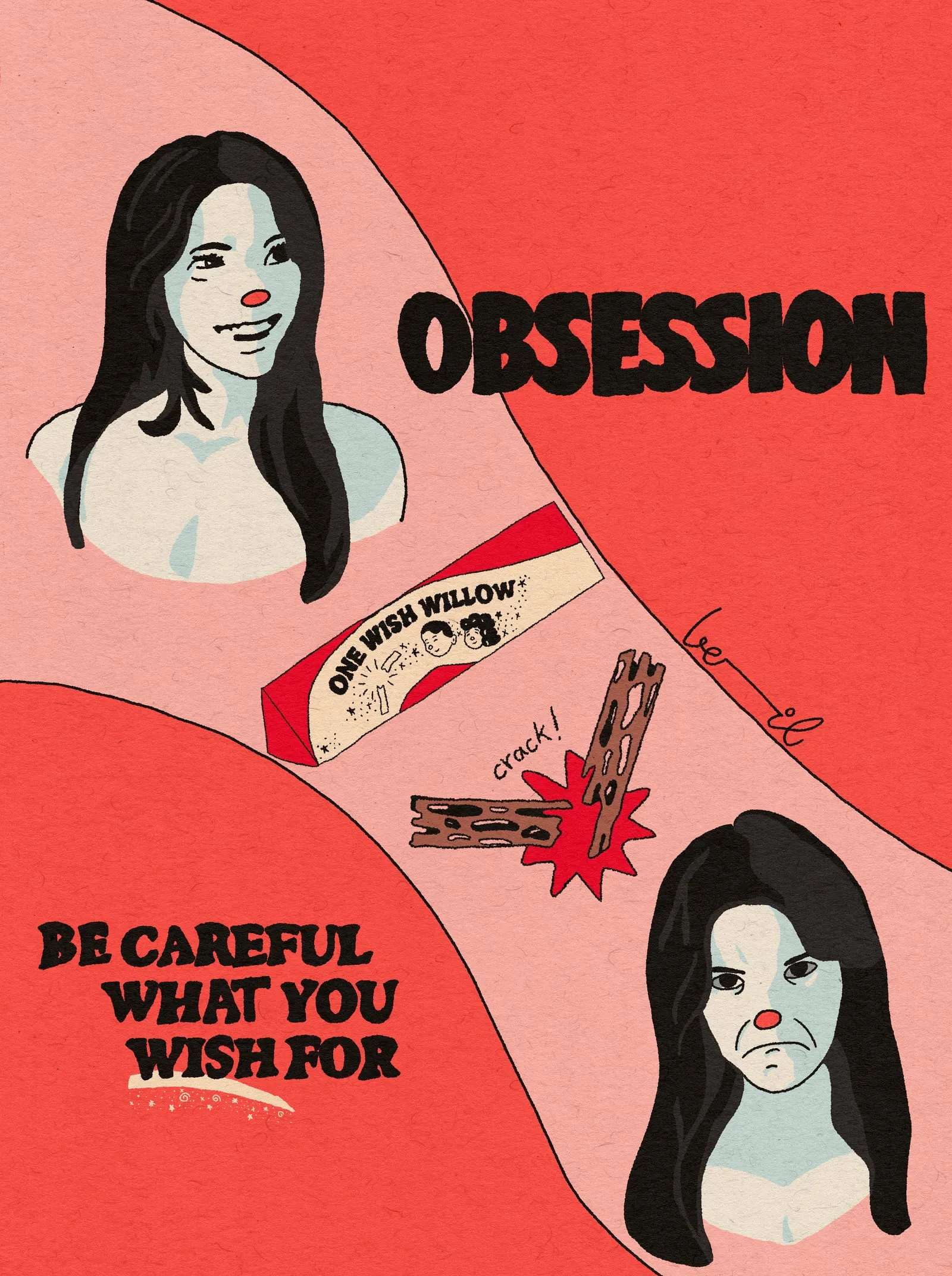
An independent horror film made for $750,000, now two weeks into its release, has kept a Star Wars film (yes, a Star Wars film) from taking the number one spot at the box office. The mere mention of Star Wars is enough to put dollar signs in people’s eyes, so how does a project with a micro-budget stay at number one? What did it get right? How can horror, which speaks to a specific audience rather than the general public, manage to stand up to the big names at the box office? The short answer: it sells an emotional experience.
Horror films follow a pattern similar to romantic comedies: a young audience, couples (two tickets sold, guaranteed), and women as the expected demographic. You laugh, you follow the characters through their emotional journeys, you agree with them, you take sides, and at the end you feel glad for them. Swap all of that for adrenaline and catharsis, turn the woman in the expected demographic into the film’s heroine, and you have adapted the formula to horror.
But making that adaptation budget-friendly took until the 1980s.
In the wave of science fiction that Star Wars set off, Ridley Scott saw the potential in the low-budget “Alien.” He convinced the studio to raise the budget past $10 million, and what began as a simple B-movie became one of the best horror films ever made. A few years earlier, though, Tobe Hooper with “The Texas Chain Saw Massacre” and John Carpenter with “Halloween” had turned projects costing a few hundred thousand dollars into million-dollar grosses. Once studios could see that potential, why wouldn’t they take the risk?
So in the early 1980s, the slasher subgenre that Halloween is generally credited with popularizing exploded. Low budgets (truly ridiculous figures, under $1 million), no-name casts (many of today’s famous actors started their careers in this subgenre), practical effects (budget-friendly even then), and a repeating script structure: the killer, the final girl who wins, and every cliché in between. Bingo. Add a little sexual suggestion to the poster and you hit the jackpot.
But like every formula, this one had an expiration date. Toward the end of the 80s the slasher market began to consume itself. Sequels identical to one another, the same masks, the same killers, the same groups of teenagers. The audience already knew what was coming. Horror did not die, but it stopped being as safe an investment as it used to be.
Today studios face an entirely different problem. Their competition is no longer just other films. There is Netflix. There is TikTok. There is YouTube. Stealing two hours of a viewer’s time has never been harder. And even budgets of hundreds of millions of dollars guarantee nothing. In recent years dozens of big studio films have fallen short of expectations at the box office, and horror films have gone back to the same old trick: low risk, high reward.
That is because horror still sells emotion in its purest form. For a Marvel film you may need star actors, hundreds of VFX artists and years of production. For a horror film, a good idea can be enough. Making people laugh is hard. Making them cry is hard. Scaring them is sometimes as simple as opening the right door at the wrong moment.
This is exactly where Obsession’s success lies. The film does not offer the audience a feeling they have never had before. Nobody sits down in the cinema expecting “this film will change my life.” But everyone is curious. Is it really that scary? Is the reaction I saw on social media exaggerated? Is the scene my friend described really that disturbing?
This is where horror’s old secret weapon comes in, the one it has used for years: selling an emotional experience.
You want to see a horror film without being spoiled. So people talk about the film but cannot quite describe it. Curiosity becomes contagious. One person watches it and tells two people. Those two tell four. The visibility that studios try to buy by spending millions of dollars sometimes spreads for free, among the audience itself.
That is why it would be incomplete to read Obsession’s success only as a box office story. This film is also a story of hope for independent filmmakers. Look at the last decade of Hollywood and the picture can seem pretty depressing. Superhero films, giant franchises, intellectual properties whose brand value is measured in billions of dollars. From the outside, it looks impossible for a new director to slip into this world.
Yet film history says exactly the opposite.
There was a time when John Carpenter had only a mask and a budget of a few hundred thousand dollars. Hardly anyone on Tobe Hooper’s set knew the actors. Sam Raimi was making a film in the woods with his friends. None of them knew they were working on future horror classics.
Looking back today, we see these films as cult classics. At the time, they were just small, risky, independent projects.
Perhaps Obsession’s greatest achievement is not how many millions of dollars it earned at the box office. It is that it can put a thought back into the mind of a film student, a content creator making short films, or a young director writing a first screenplay: “Maybe my film can do it too.”
Hollywood has needed that dream in every era. In 2026, it still does.